Hearing tests and hearing aids · North Kansas City
Everybody gets this chart. Almost nobody gets it explained.
An independent office on Armour Road. The test is free and takes about twenty minutes, and the chart it produces is the only document in this trade that actually tells you anything. Here is one, read out line by line, before you come anywhere near a price.
The audiogram
Two axes, and neither of them is the one people assume.
This is a real shape of hearing loss, the ordinary age related kind, plotted the way every clinic in the country plots it. Left to right is pitch, not volume. Down is worse.
- Right ear, marked O
- Left ear, marked X
- Where speech sits
Across is pitch
Left is low, like a diesel idling or a man’s voice through a wall. Right is high, like a kettle, a smoke alarm chirp, or the letter s. It is not loudness and it is not time.
Down is worse
The number is how quiet a sound can be before you stop hearing it, so a bigger number is a worse ear. Zero at the top is not silence, it is the quietest sound an average young adult can just detect.
The shaded band
Ordinary conversation at a normal distance falls inside it. Anything plotted below the band is a sound that is simply not reaching you at that pitch, whoever is talking and however hard they try.
| Ear | 250 Hz | 500 Hz | 1 kHz | 2 kHz | 4 kHz | 8 kHz |
|---|---|---|---|---|---|---|
| Right, O | 15 | 20 | 25 | 40 | 55 | 70 |
| Left, X | 20 | 20 | 30 | 45 | 60 | 75 |
What actually goes missing
The consonants leave first, and the consonants are where the meaning is.
Vowels are low and loud. Consonants are high and quiet, and s, f, th, sh, t, k and p sit right out in the corner of the chart that goes first. Lose them and the volume is fine and the sentence is not.
What was said
She said the bus leaves at six thirty from the church.
Spoken at an ordinary level, four feet away, no background noise.
What arrives
–e –ai– –e bu– lea–e– a– –i– –ir–y –rom –e –ur–.
Every high frequency consonant removed. Nothing else has been changed, and no part of it has been made quieter. This is why turning the television up does not fix it, and why a room with other people talking in it is so much harder than a quiet one.
Reading the number
What the decibel figure means outside the booth.
These are the bands the whole profession uses. They describe the quietest sound you can detect, averaged across the speech frequencies.
| dB HL | Called | What it is like |
|---|---|---|
| 0 to 25 | Normal | Nothing is being missed, including a whisper across a quiet room. |
| 26 to 40 | Mild | Fine one to one. A restaurant is work, and the television is two notches louder than everybody else wants it. |
| 41 to 55 | Moderate | Ordinary conversation at a normal level is genuinely difficult. This is where most people finally come in, usually about seven years late. |
| 56 to 70 | Moderately severe | Speech has to be raised to be followed at all, and the telephone stops working. |
| 71 to 90 | Severe | Only shouted speech close to the ear, and lip reading is doing most of the work. |
| 91 and above | Profound | Speech is not audible. This is where the conversation moves on from hearing aids. |
The appointment
Twenty minutes in the box, and you leave with the chart whatever you decide.
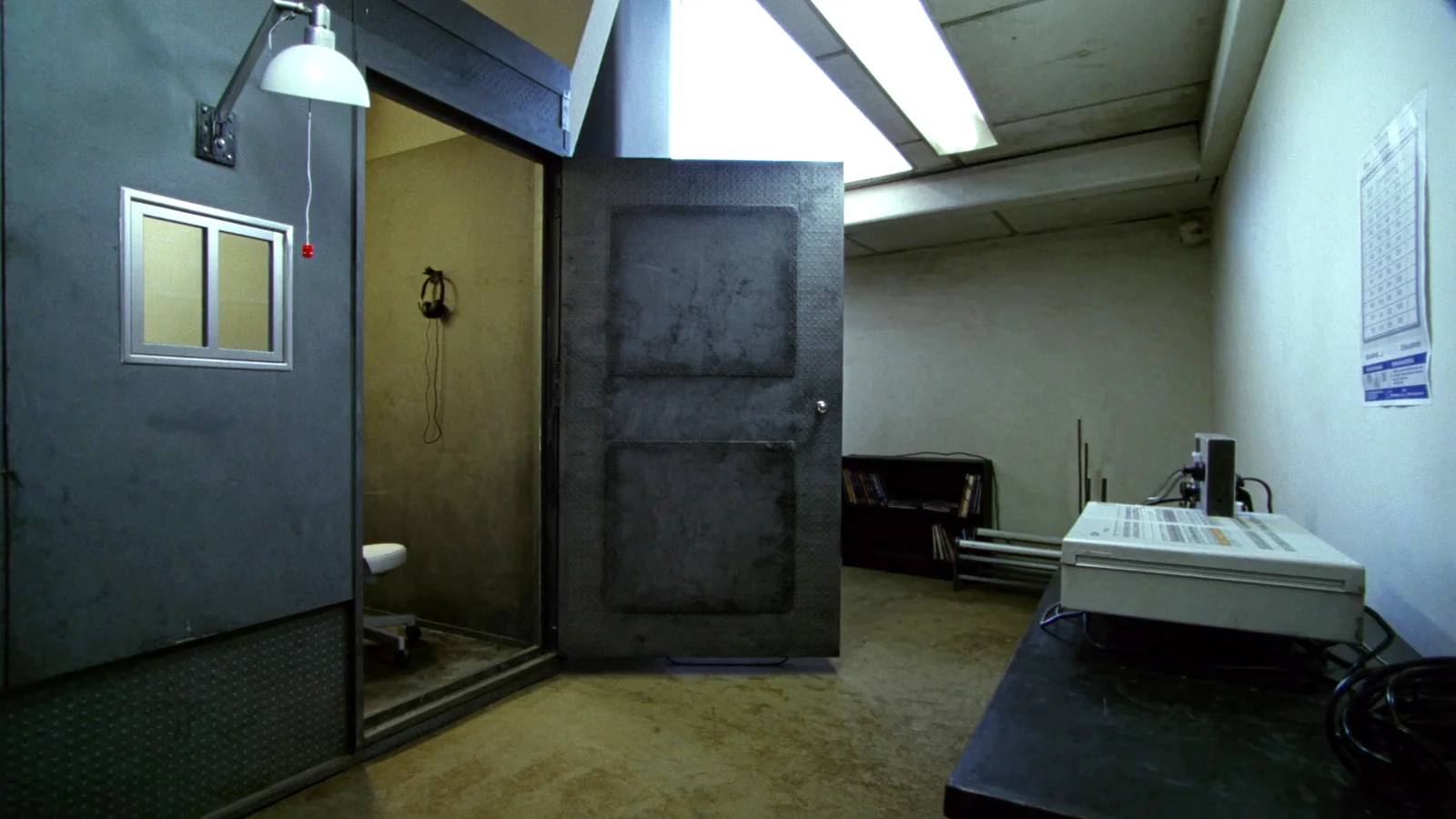
The booth is a double walled steel room, which is the only way to measure a threshold honestly. You press a button when you hear a tone, in each ear, at each pitch. Then a bone conductor behind the ear separates a nerve problem from a plumbing one, then words at a set level to see how much you understand rather than how much you detect, then a pressure test on the eardrum that takes about four seconds a side.
Wax is checked and removed at the same visit if it is in the way, because a blocked ear canal will produce a wrong chart and there is no point testing around it.
The chart is yours. A printed copy goes home with you with the numbers on it, and it is portable. Any other office in the country can read it, which is the point of a standard.
Cost
Published, because in this trade it usually is not.
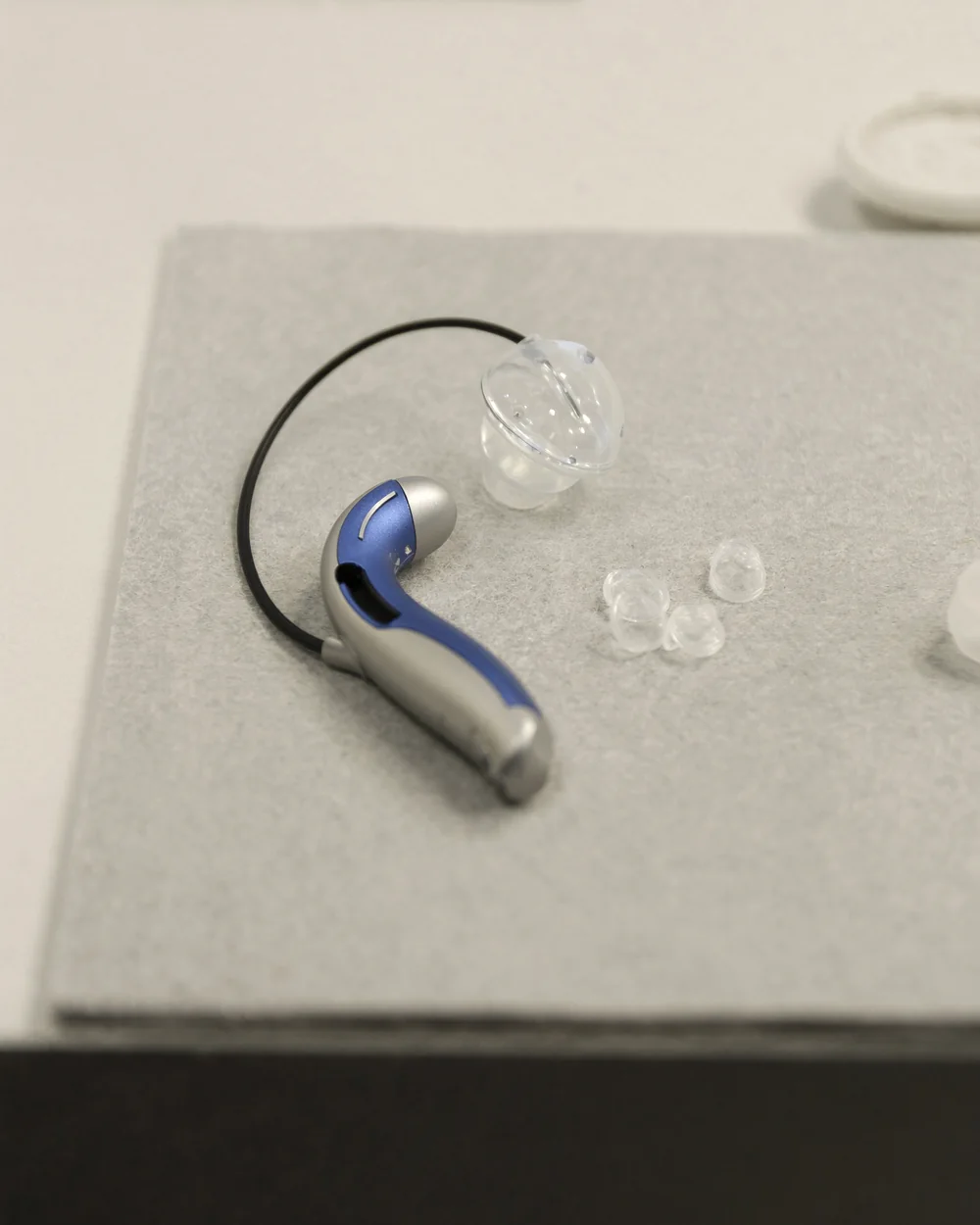
Hearing aids are sold in bands, and the band buys processing and channels rather than volume. All of these prices are for a pair, fitted, and include the follow up below.
| What | Price |
|---|---|
| Hearing test and written audiogram | No charge |
| Wax removal, either ear | $45 |
| Entry band, pair, fitted Enough channels for quiet rooms and the television. | $1,900 |
| Middle band, pair, fitted Directional microphones and noise handling. The band most people end up in. | $3,400 |
| Top band, pair, fitted Worth it in restaurants and meetings. Not worth it if you live quietly. | $5,200 |
| Repair, out of warranty, per aid | from $95 |
| Cleaning, checks and reprogramming | Included, for as long as you own them |
Before you buy anything
Missouri gives you thirty days. A hearing aid sold in this state comes with a statutory right to cancel, in writing, within thirty days of delivery, and the seller has to give you that in writing at the point of sale. Ask for it. Ask what the restocking charge is, because it is allowed and it varies.
Over the counter aids are real and they are legal. Since 2022 you can buy one in a pharmacy without seeing anybody, and for a mild to moderate loss they work. They are not right for a loss like the one plotted above, and they are not right for one ear that is much worse than the other, which needs looking at rather than amplifying.
Get the audiogram either way. A sudden loss in one ear is the one presentation in this trade that is urgent, and no device sorts it out.

On Armour Road, and worth knowing before you park.
The office
123 Main St, Suite 4
North Kansas City, MO 64116
Ground floor, no lift and no steps. Park behind the building rather than on Armour, where the two hour limit is enforced. The booth is at the back and the office is quiet, which is the whole point of it.
| Monday to Thursday | 8:30 to 5 |
|---|---|
| Friday | 8:30 to 1 |
| Saturday, Sunday | Closed |
Repairs, cleaning and battery collection are walk in during opening hours and do not need an appointment.
Bring
Somebody whose voice you struggle with most. Half of what the test cannot measure is which particular person you cannot follow, and they can sit in the room.